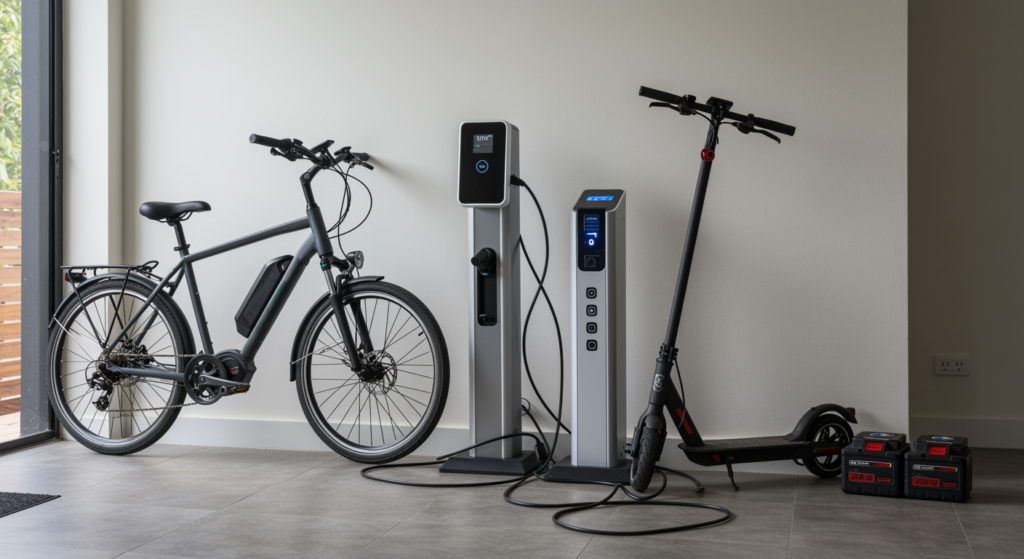
The rapid growth of e-bikes, e-scooters, mobility scooters, golf buggies and cordless power tools has significantly increased the number of high-capacity lithium batteries being charged every day. These devices are now common in homes, apartments, retirement communities and commercial environments.
Many of these batteries are charged overnight or left unattended for long periods. While lithium battery technology continues to improve, extended or unsupervised charging can increase the risk of overheating, particularly when multiple devices are charged in enclosed or shared spaces.
Charging beyond the necessary time period can place additional stress on batteries, chargers and electrical outlets. In some environments, charging practices rely heavily on user behaviour, such as remembering to unplug devices once charging is complete.
Behaviour-based controls can be inconsistent, especially in shared or high-use settings.
Common strategies used to reduce charging risk may include:
Limiting unattended charging duration
Installing fixed safety infrastructure
Using automatic power shut-off mechanisms
Implementing clear charging policies
Automatic power shut-off outlets are designed to stop power after a defined period, reducing reliance on user action. These solutions operate independently of apps, Wi-Fi or user setup.
Automatic power shut-off technology is designed to support risk reduction, not replace other electrical or fire safety measures. When combined with appropriate installation, policies and education, it can form part of a broader approach to safer battery charging.
Disclaimer:
Switch Star is designed to support risk reduction when charging high-capacity batteries including e-bikes, e-scooters, mobility scooters, golf buggies and power tools. It does not guarantee prevention of fire or electrical incidents and should be used as part of a broader electrical and fire safety strategy.
JOHN O’CALLAGHAN – MANAGING DIRECTOR, SWITCH STAR
Fill out the form below to instantly download our free brochure and learn more.
| QTY | Per Unit (Incl. GST) | Shipping |
|---|---|---|
| 1 - 20 | $90 | $10 |
| 21 - 50 | $85 | $20 |
| 51 - 99 | $80 | $50 |
| 100 - 200 | $75 | $75 |
| 200+ | Price upon request | Free |